


FOREST ROW & EAST GRINSTEAD - Life on the Edge of a Forest

Ashdown Forest has shaped the communities around it for centuries. Adele Trathan explores the distinctive character of the area, including the neighbouring towns of East Grinstead and Forest Row
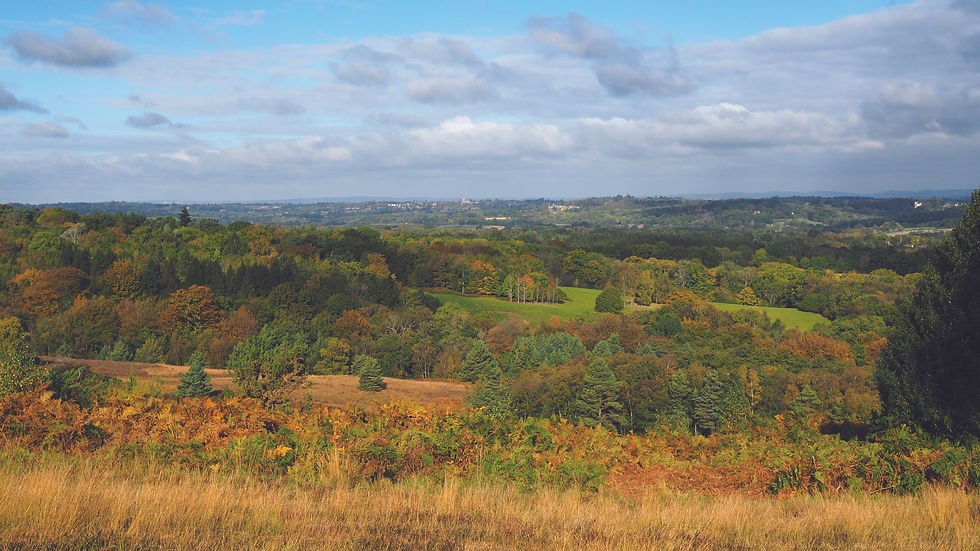
For those who live in Mid Sussex and the surrounding area, Ashdown Forest is more than a visitor attraction. It is the backdrop to daily life: a place for dog walks, weekend runs, family picnics, horse riding and escaping into open space. Covering more than 6,500 acres, Ashdown Forest is the largest area of accessible heathland in South East England. Its distinctive mix of open heath, woodland, streams and far-reaching views gives it a character unlike anywhere else in Sussex. While its connection with A.A. Milne and Winnie-the-Pooh attracts visitors from around the world, for local people the Forest's appeal lies in something much simpler: the sense of space and tranquillity that remains remarkably unchanged despite its proximity the expanding towns of the South East.

The changing seasons are particularly evident here. Spring brings carpets of fresh green across the woodland edges, while summer transforms large areas of heath into vibrant shades of purple. Autumn colours are spectacular, especially around the Forest's wooded valleys, and winter reveals views stretching for miles across the High Weald that are hidden during the lush landscape of summer.
The wider area surrounding the forest is equally rich in history and character. The High Weald landscape, recognised as an Area of Natural Beauty, is a patchwork of ancient routes, historic farms, fields and woodland that has evolved over centuries. Many of the communities around the Forest still retain a strong sense of identity despite modern growth.

One of the area's architectural treasures is Standen, the Arts and Crafts National Trust property just outside East Grinstead. Designed by Philip Webb and furnished by William Morris & Co., it remains one of the finest examples of the movement anywhere in the country. Meanwhile, the Bluebell Railway continues to be one of Sussex's best-loved heritage attractions, bringing steam trains back to life across the countryside and providing a tangible link to the region's railway history.
The Forest Way, which follows the route of the former railway line between East Grinstead and Groombridge, has become one of the area's most popular recreational routes. Used daily by walkers, cyclists and runners, it is a reminder of how former transport infrastructure can find a second life at the heart of a community.
What makes this part of Sussex particularly distinctive is the way history, landscape and contemporary life sit comfortably alongside one another. Ancient woodland exists alongside thriving independent businesses. Historic market towns are minutes from open countryside. At the heart of this landscape sit East Grinstead and Forest Row. Although separated by only a few miles, they have developed very different personalities. Together they represent much of what makes this corner of Sussex such an attractive place to live, work and explore.

East Grinstead: History in Everyday Life
Occupying a unique place in twentieth-century history through the pioneering work of Sir Archibald McIndoe
East Grinstead is often described as one of England's finest historic market towns, but for residents its appeal lies in how naturally that history forms part of everyday life. The High Street, with its remarkable collection of timber-framed medieval buildings, is not simply a heritage asset; it remains a working town centre filled with shops, cafés, restaurants and businesses that keep the area vibrant throughout the year.

Few places in Sussex can match the architectural variety found along the High Street. Medieval timber-framed houses stand alongside Georgian and Victorian buildings, creating a story of the town's development over the centuries. Among the town's most distinctive historic buildings are its almshouses. Sackville College, founded in 1609 by Robert Sackville, 2nd Earl of Dorset, remains one of the finest examples in Sussex. Built from local sandstone around a peaceful quadrangle, it continues to provide accommodation for elderly residents more than four centuries after its foundation, offering a rare example of a historic institution that still fulfils its original purpose. Along with the nearby Dorset and Clarendon almshouses, it reflects a long tradition of philanthropy and community support that has shaped the town's development.
Those interested in discovering more about the history of the town should pay a visit to East Grinstead Museum. Housed in a historic timber-framed building just off the High Street, the museum brings together stories from across the centuries, from the town's medieval origins and local industries to its nationally significant role during the Second World War. Exhibitions on Sir Archibald McIndoe, the Queen Victoria Hospital and the Guinea Pig Club sit alongside displays from history and life in the town, providing valuable context to understanding how East Grinstead evolved into the community it is today.

East Grinstead occupies a unique place in twentieth-century history through the pioneering work of Sir Archibald McIndoe and the Queen Victoria Hospital during the Second World War. It brought international recognition to the town and transformed reconstructive surgery with the legacy of the famous Guinea Pig Club remaining an important part of local identity and civic pride.
Beyond its history, East Grinstead has evolved into a town that balances heritage with modern living. Independent retailers sit alongside national brands, while restaurants, pubs and cafés ensure the centre remains active well beyond shopping hours. The result is a town that manages to be historically significant without being defined solely by its past. Its architectural heritage provides the setting, but it is the strength of the community and its role as a regional hub that continue to shape its future.

Forest Row: Independent Spirit and Forest Living
It's long attracted creative people drawn by both the landscape and the village's distinctive atmosphere
Just a few miles from East Grinstead, Forest Row has developed a unique character of its own. While its neighbour is defined by its historic High Street and market-town heritage, Forest Row's identity is closely linked to the surrounding landscape and a strong tradition of independence.
The village grew along the historic route through Ashdown Forest and retains a relatively informal layout that reflects its gradual development. Architecturally, it is an eclectic mix of Victorian properties, traditional Sussex cottages, former coaching buildings and later additions.

Over the years, the village has developed a reputation for creativity, sustainability and neighbourhood involvement. Organic community farms and independent businesses are at the heart of village life, and the high street remains notable for its cafés, specialist food shops, and locally owned retailers. This independent character has helped Forest Row maintain a distinct identity at a time when many towns and villages have become increasingly homogenised.
Forest Row has long attracted creative people drawn by both the landscape and the village's distinctive atmosphere. Artists, writers, musicians and craftspeople have made their home here, contributing to a cultural life that is unusually rich for a community of its size. Workshops, exhibitions and community arts events are woven into village life, helping to foster an environment where creativity is actively encouraged.

Adding another layer to the area's enduring fascination are the stories and traditions that have grown up around the landscape itself. Ashdown Forest and the surrounding High Weald have long attracted those interested in folklore, spirituality and alternative interpretations of the landscape. Among these are claims that a number of ley lines – hypothetical alignments linking ancient sites and landscape features – pass through or near the area. While such theories remain a matter of personal belief, they form part of the rich tapestry of local stories that contribute to Forest Row's reputation as a place where history, nature and a sense of mystery often intersect.
Many people living in the area enjoy the close relationship to nature and community. This influence can be seen in everything from local events and markets to environmental initiatives and cultural activities. Ashdown Forest is never far away, and many residents make regular use of its extensive network of paths and bridleways. Whether walking, running, cycling or riding, access to the Forest remains one of the greatest assets for the community.

Perhaps the most appealing aspect of Forest Row is its ability to feel both connected and self-contained. Close enough to larger towns for convenience yet surrounded by countryside, it offers a balance that many communities would love to experience.
Together, Forest Row and East Grinstead demonstrate the richness and diversity of life around Ashdown Forest. One looks towards its historic role as a market town, the other towards its relationship with landscape and community. Both continue to evolve while remaining connected to the history, countryside and character that make this part of Sussex such a distinctive place to call home.



Comments